
普罗米修斯
Chinese conservationist explores community-based wildlife protection in Kenya_我的网站

一 | KABUL, Afghanistan -- The watchdog for U.S. assistance to Afghanistan has warned that the Taliban are benefiting from international aid through the establishment of fraudulent nongovernmental organizations.The Taliban have exerted greater control over national and international NGOs since seizing power in August 2021. They have barred Afghan women from NGO work and sought to push out foreign organizations from the education sector.A report from the U.S. Special Inspector General for Afghanistan Reconstruction, or SIGAR, said it found that the Taliban benefit from American-funded education programming through the generation of tax revenues and from more “nefarious” methods like the establishment of fraudulent NGOs and extorting and infiltrating existing NGOs to obtain or direct international donor aid. In May, a SIGAR report highlighted the Taliban’s interference with NGO work in Afghanistan. The Ministry of Economy, which supervises the sector, rejected the claims. Ministry spokesman Abdul Rahman Habib, responding to the latest SIGAR report on Monday, said there was no evidence of interference.According to the report, published this month, the U.S. has spent around $185 million on education in Afghanistan since August 2021.An NGO official told SIGAR that the Taliban target and extort Afghans who receive monetary support from American-funded education programs under the guise of taxation. In another example, NGO officials told the watchdog that the Taliban coerced NGOs into hiring supporters or purchasing goods from Taliban-owned companies.Taliban policies and priorities have reduced the overall quality of education, with a drop in the number of teachers and a decrease in teacher quality, as unqualified community members or Taliban officials replace staff, SIGAR said."We found that the Taliban have been unable to fully fund public school teacher salaries and building maintenance costs, leading to further teacher shortages and the deterioration of school buildings."The redirection of international donor aid to community-based education schools, along with financial and infrastructure challenges facing the Taliban, raised serious questions about how the Taliban could sustain the education sector and if they had any intention of doing so, the report said.An Education Ministry spokesman, Qari Mansor Ahmad Hamza, called the SIGAR report baseless and said the quality of teaching and school facilities in Afghanistan is better than before.“At present, the projects and financial assistance of international aid agencies are under the strong supervision of the top leadership of the Islamic Emirate of Afghanistan,” Hamza said, employing the term the Taliban use to describe their administration. The leadership promises to “invest this aid” and share reports with the country, the spokesman added.。
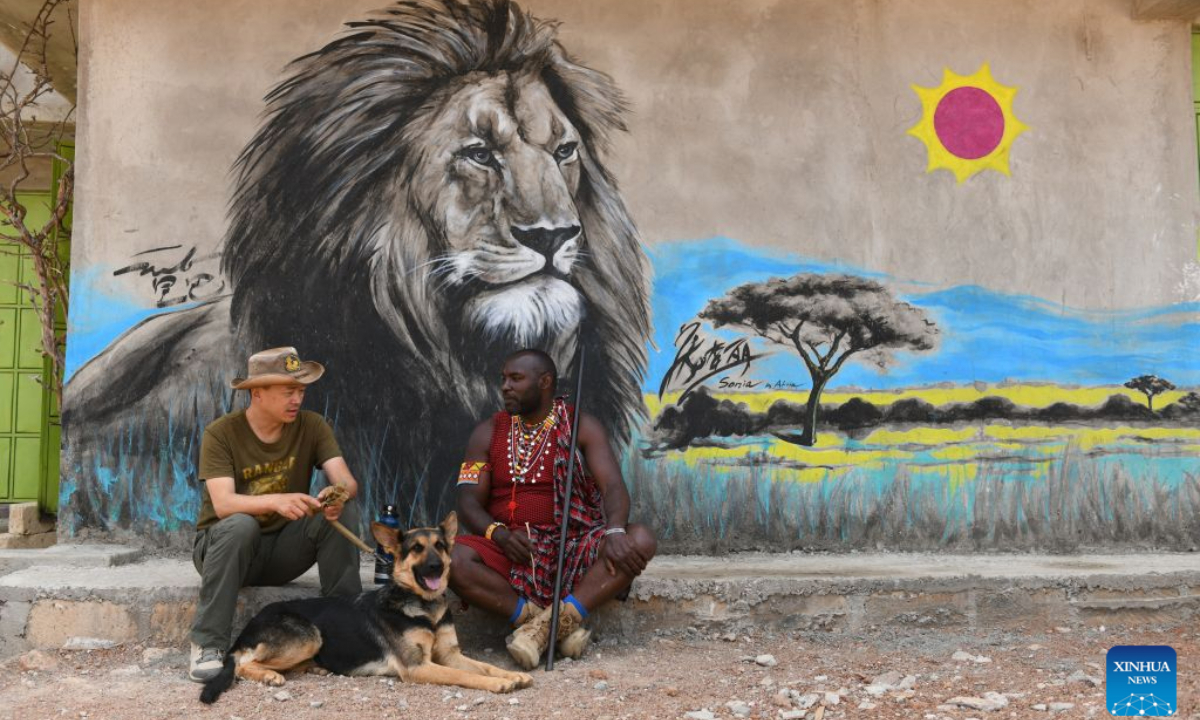
Among them is Chinese conservationist Zhuo Qiang, nicknamed "Simba," the Swahili word for lion. For him, this early-morning routine is driven by a broader mission to achieve human-wildlife coexistence.
In 2010, Zhuo left his job in China at the age of 37 and embarked on a less-traveled path: pursuing wildlife conservation in Kenya.
Without professional training in wildlife conservation, he found himself in a territory then dominated by Western organizations and local practitioners.
But Zhuo decided to stay. "I wanted to prove that Chinese people could also do wildlife conservation," he said.
Initially, Zhuo saw conservation largely through the lens of wildlife science: working in the field, studying animals and collecting data.
Living and working with Maasai communities changed that perspective. "The fate of wildlife was closely tied to the people sharing the same land," he said.
In the Maasai Mara ecosystem, livestock grazing is deeply connected to the livelihoods of pastoral communities. "If local people are asked to stop grazing but are given no alternative source of income, conservation cannot be sustainable," Zhuo said.
That principle laid the foundation for his work with the local community in establishing the Ol Kinyei Conservancy.
The area had suffered from prolonged overgrazing, with plants and the land itself deteriorating. Under the conservation model, local grazing land was leased and gradually restored, allowing vegetation to recover and creating a more suitable habitat for wildlife, said Zhuo.
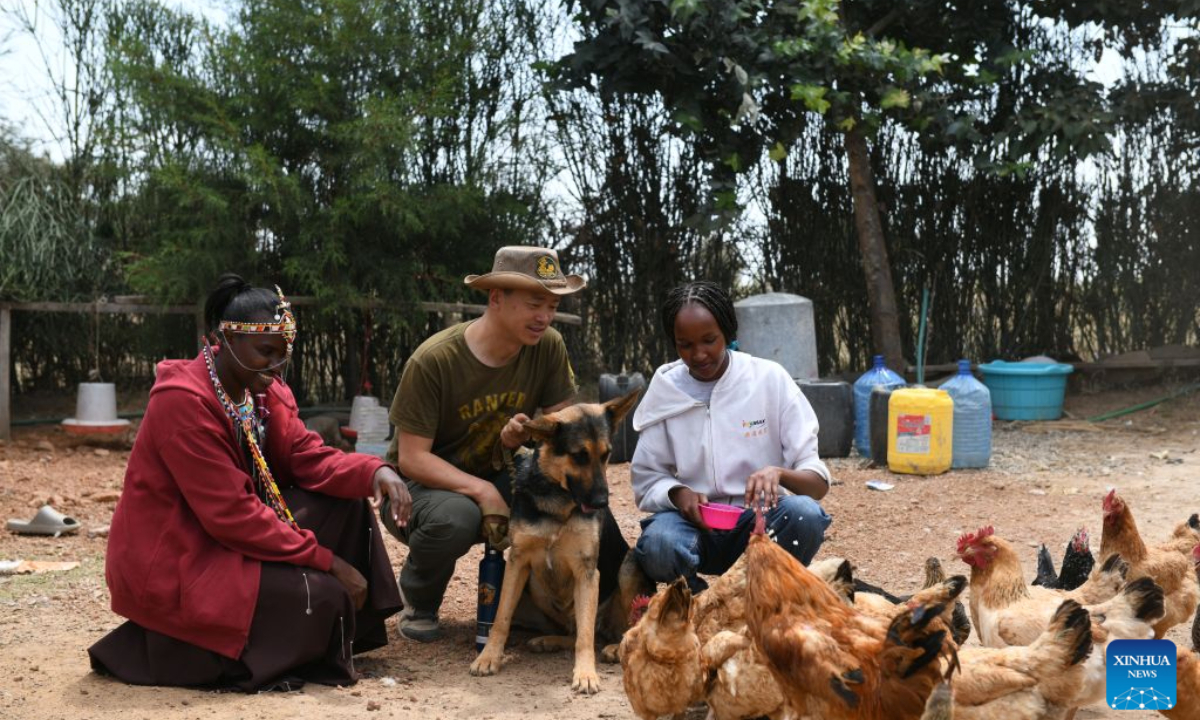
Meanwhile, households participating in the scheme receive land-rental income and have access to jobs such as wildlife rangers and tourism workers. Their average annual income has increased from around 500 U.S. dollars to about 3,700 dollars, according to Zhuo.
Some residents from surrounding communities also learned from the experience and brought the approach back to their own grazing areas.
Nowadays, 26 private conservancies have been established around the Maasai Mara National Reserve, covering about 1,600 square km, according to Zhuo.
He believes the network of community conservancies provides additional safe space for wildlife to move and survive, extending conservation efforts beyond the boundaries of a single national reserve and into surrounding communities.
Simon Msago, a Maasai community leader in Ngoswani, said Zhuo's work encouraged more residents to take an active role in conservation.
In the past, many residents saw few direct benefits from wildlife conservation and had limited awareness of its importance. Today, community members are increasingly willing to work as rangers and protect wildlife, creating an effective layer of protection around the conservancies, Msago said.
"Human-wildlife conflict cannot be solved simply through restrictions and prohibitions. The key is to create alternative sources of income so that residents can gain tangible benefits from conservation," Zhuo said.
"That is what makes community-based conservation sustainable -- allowing local people to become part of wildlife conservation rather than bystanders with no stake in it."
While continuing his work in the Maasai Mara, Zhuo has also sought to strengthen exchanges between China and Africa in wildlife conservation.
In recent years, he has visited more than 30 nature reserves and national parks in China, sharing his experiences of community-based conservation in Africa with Chinese counterparts.
"Conservation practices in China and Africa each have their own characteristics, and there is much that the two sides can learn from each other," he added.
。
Current article:http://gorr.shuacanrandenmizhuohaoeiliang.buzz/list_5yzy4d/y2gl.html
Published on:11:08:36
 供应商上门讨要货款,发现上海总部人去楼空?知名平台回应:不良商户寻衅滋事,散播谣言!_码头_碧波
 原创 【浮生琐记】程秉铎 || 云峰山秋游记
 दिल्ली के मुखर्जी नगर में युवती को पहले मारा थप्पड़, फिर सोने की चेन छीनकर फरार हुए बदमाश
 茅台回应“县级市场自营店招商”:“开店门槛30万元”“总部给予50万元装修补贴”均是虚假诈骗信息
 黄山栾开花 银杏果变黄 一起寻找秋天的信号吧
 Chinese FM calls for healthy, stable, sustainable China-S. Korea ties